Global Sports Fishing Equipment Market, By Product (Rods, Reels, Hooks, Lures, Lines, Rigs, Jig Heads, Others), Application (Freshwater Fishing, Saltwater Fishing
), Distribution Channel (Independent Sports Outlets, Franchised Sports Outlets, Modern Trade Channels, Direct to Consumer Brand Outlets, Direct to Customer Online Channels), End Users (Individual Consumers, Clubs, Sports Organizers) – Industry Trends and Forecast to 2029.
Market Analysis and Size
Throughout the years, the sports fishing equipment market has reflected steady growth. Asia Pacific region, excluding Japan, has a high growth potential, and the resurgence of outdoor recreational activities, combined with the gradual relaxation of lockdown regulations, are key factors that will support faster recovery and the adoption of newer technologies in this space over the forecasted period. Moreover, the sustainable materials, electronics, and artificial intelligence innovations have gotten a lot of attention in the world of fishing equipment, especially for high-end rigs, which will bolster the growth of the market. The higher demand of the sports fishing equipment will aid the market in gradual but consistent expansion in the long run.
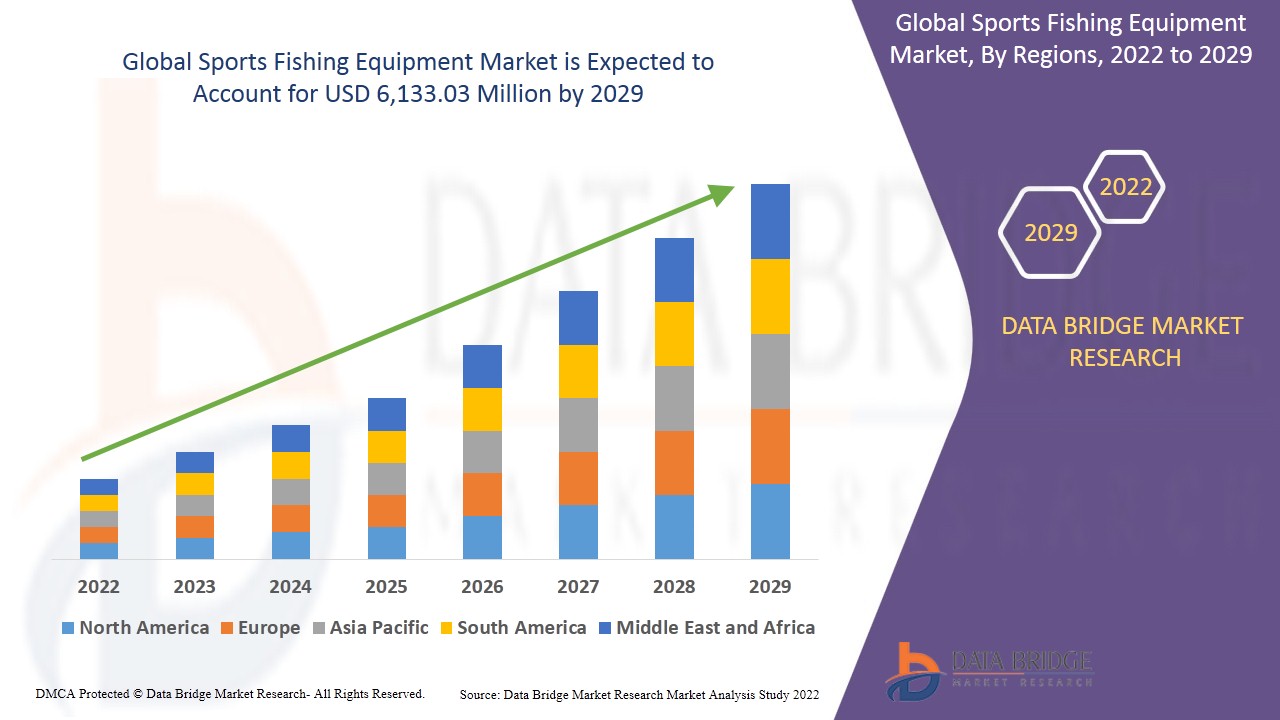
- Global sports fishing equipment market was valued at USD 4657.5 million in 2021 and is expected to reach USD 6,133.03 million by 2029, registering a CAGR of 3.5% during the forecast period of 2022-2029.
Market Definition
Sports fishing equipment basically includes items such as the fishing rods, fishhooks, lines, baits, lures, and sinkers, which are used for both recreational and competitive fishing. Fishing without gear, grappling, stunning, line fishing, trapping, fishing with bag nets, trawling seining, and gillnetting are all done using these instruments. To attract, retain, and capture the fish, fishing lines are connected with natural or artificial bait. These lines are generally linked to reels for casting, spinning, and fly fishing, and they help in the capture of huge fish and shellfish.
Sports Fishing Equipment Market Dynamics
This section deals with understanding the market drivers, advantages, opportunities, restraints and challenges. All of this is discussed in detail as below:
-
Increasing Sports Fishing
The increasing popularity of recreational fishing and the rising demand for customized sports fishing equipment will bolster the growth of the market. The increasing consumer preference for outdoor recreational activities coupled with the increasing participation in water-based sports activities will also cushion the market’s growth.
-
Advancements and Innovations in the Equipment
Furthermore, the investments in high-quality fishing equipment by sports fishermen and anglers which can be used in both freshwater and saltwater will generate lucrative opportunities fort the market. Moreover, the growth of the online retailing market along with the development of innovative products by manufacturers that are connected with sensors to locate and track fishing hotspots through a smartphone application will also drive market’s growth.
Others
The growth determinants such as the increasing number of campaigns encouraging sports fishing are also projected to accelerate the growth of the market. The rising number of fishing associations and recreational fishing clubs and aggressive promotional activities by manufacturers are also further contributing to the market growth. Moreover, factors such as the growing millennial population and rapid urbanization are expected to further fuel growth of the market over the forecast period.
Restraints/Challenges
-
High Prices of the Product
On the other hand, the high costs associated with fishing rigs will create hindrances for the growth of the sports fishing equipment market.
-
Dearth Of Fishing Locations
The lack of adequate fishing locations will challenge the sports fishing equipment market.
The increasing environmental concerns associated with abandoned fishing gear and ethical considerations towards fishing activities are also limiting the fishing activities.
This sports fishing equipment market report provides details of new recent developments, trade regulations, import-export analysis, production analysis, value chain optimization, market share, impact of domestic and localized market players, analyses opportunities in terms of emerging revenue pockets, changes in market regulations, strategic market growth analysis, market size, category market growths, application niches and dominance, product approvals, product launches, geographic expansions, technological innovations in the market. To gain more info on the sports fishing equipment market contact Data Bridge Market Research for an Analyst Brief, our team will help you take an informed market decision to achieve market growth.
Post COVID-19 Impact on Sports Fishing Equipment Market
The recent outbreak of COVID-19 has critically impacted the sports fishing equipment market. The lockdown and social distancing restrictions led to the lesser gatherings and postponement or cancellations of various activities or games associated with fishing, which further affected the overall production and sales of sports fishing equipment market. Lesser demand for the fishing equipment, complications in operational activities and disrupting global supply chains led to the negative impact on the market.
On the brighter side, the market is estimated to recovery quickly after the COVID situation as market players will work on increased production, advancements and innovations and supply networks which will progressively improve as the situation improves. The focus of manufacturers towards new market trends to fulfil consumer requirements in the post-pandemic phase will further help to excel the availability of sports fishing equipment in the developing and emerging markets post pandemic.
Recent Development
- In October 2020, Kistler Rods has announced the release of their Kistler GRAPHITE rods, which are priced at $150 each. The firm gives a one-year replacement warranty on these goods, which are handcrafted. Kistler RodsTM is a leading manufacturer of high-quality, hand-crafted fishing rods. Anglers appreciate fishing with Kistler Rods goods because they are very sensitive, robust, and well-made. Kistler Rods are easier to handle and less tiring, plus they catch more fish.
- In December 2020, Catch Co. (a digital sportfishing brand platform) has closed a $6 million round of fundraising headed by previous investor Listen Ventures. It was intended to promote new products and brands, such as fishing tackle subscriptions, lures, and rods, as well as the debut of Karl's Bait & Tackle's e-Commerce site. Catch Co.'s purpose is to develop outstanding fishing brands, goods, and shopping experiences for the modern angler, and these funds will help them achieve that goal.
Global Sports Fishing Equipment Market Scope
The sports fishing equipment market is segmented on the basis of product, application, distribution channel and end users. The growth amongst these segments will help you analyze meagre growth segments in the industries and provide the users with a valuable market overview and market insights to help them make strategic decisions for identifying core market applications.
Product
- Rods
- Reels
- Hooks
- Lures
- Lines
- Rigs
- Jig Heads
- Others
On the basis of product, the sports fishing equipment market has been segmented into rods, reels, hooks, lures, lines, rigs, jig heads and others.
Application
- Freshwater Fishing
- Saltwater Fishing
On the basis of application, the sports fishing equipment market is segmented into freshwater fishing and saltwater fishing.
Distribution Channel
- Independent Sports Outlets
- Franchised Sports Outlets
- Modern Trade Channels
- Direct to Consumer Brand Outlets
- Direct to Customer Online Channels
On the basis of distribution channel, the sports fishing equipment market is segmented into independent sports outlets, franchised sports outlets, modern trade channels, direct to consumer brand outlets and direct to customer online channels.
End Users
- Individual Consumers
- Clubs
- Sports Organizers
On the basis of end users, the sports fishing equipment market is segmented into individual consumers, clubs and sports organizers.
Sports Fishing Equipment Market Regional Analysis/Insights
The sports fishing equipment market is analyzed and market size insights and trends are provided by country, product, application, distribution channel and end users as referenced above.
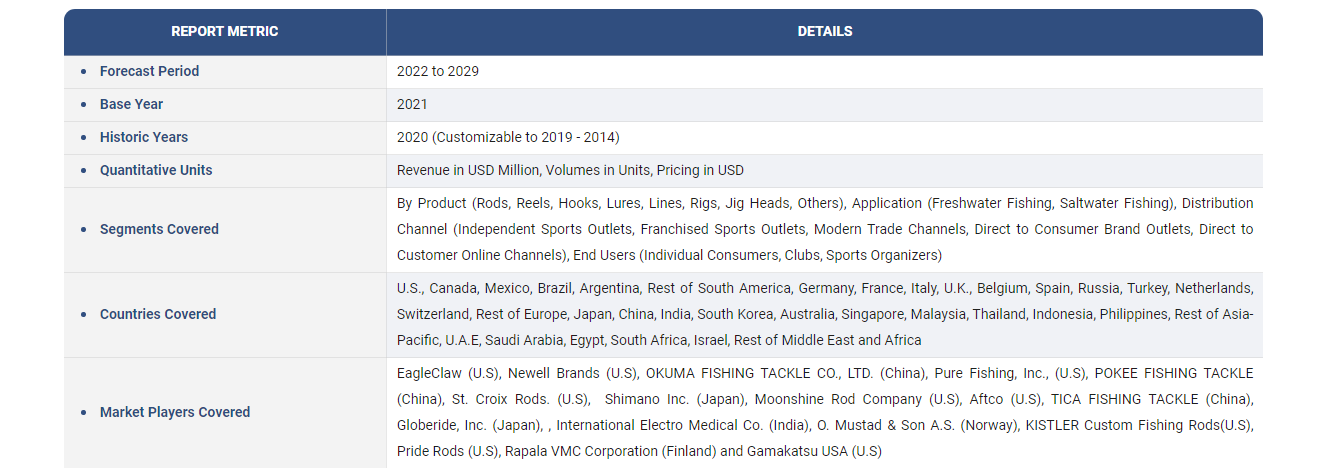
The countries covered in the sports fishing equipment market report are U.S., Canada and Mexico in North America, Germany, France, U.K., Netherlands, Switzerland, Belgium, Russia, Italy, Spain, Turkey, Rest of Europe in Europe, China, Japan, India, South Korea, Singapore, Malaysia, Australia, Thailand, Indonesia, Philippines, Rest of Asia-Pacific (APAC) in the Asia-Pacific (APAC), Saudi Arabia, U.A.E, South Africa, Egypt, Israel, Rest of Middle East and Africa (MEA) as a part of Middle East and Africa (MEA), Brazil, Argentina and Rest of South America as part of South America.
North America dominates the sports fishing equipment market because of strong demand for fishing sports and the high expenditure for fishing-related expenses. Asia-Pacific, on the other hand, is estimated to register a significant growth owing to the significant growth in the fishing industry and the growing consumption of fish within the region.
The country section of the report also provides individual market impacting factors and changes in market regulation that impact the current and future trends of the market. Data points like down-stream and upstream value chain analysis, technical trends and porter's five forces analysis, case studies are some of the pointers used to forecast the market scenario for individual countries. Also, the presence and availability of global brands and their challenges faced due to large or scarce competition from local and domestic brands, impact of domestic tariffs and trade routes are considered while providing forecast analysis of the country data.
Competitive Landscape and Sports Fishing Equipment Market Share Analysis
The sports fishing equipment market competitive landscape provides details by competitor. Details included are company overview, company financials, revenue generated, market potential, investment in research and development, new market initiatives, global presence, production sites and facilities, production capacities, company strengths and weaknesses, product launch, product width and breadth, application dominance. The above data points provided are only related to the companies' focus related to sports fishing equipment market.
Some of the major players operating in the sports fishing equipment market are EagleClaw (U.S), Newell Brands (U.S), OKUMA FISHING TACKLE CO., LTD. (China), Pure Fishing, Inc., (U.S), POKEE FISHING TACKLE (China), St. Croix Rods. (U.S), Shimano Inc. (Japan), Moonshine Rod Company (U.S), Aftco (U.S), TICA FISHING TACKLE (China), Globeride, Inc. (Japan), , International Electro Medical Co. (India), O. Mustad & Son A.S. (Norway), KISTLER Custom Fishing Rods(U.S), Pride Rods (U.S), Rapala VMC Corporation (Finland) and Gamakatsu USA (U.S) among others.
Source:Data bridge


